
Neotropical fern & lycophyte diversity
The American tropics are one of the most biologically diverse places on earth, and this holds true for pteridophytes as well: more than 1/3 of the world's fern and lycophyte species are found in the Neotropics. A large and growing number of studies have examined why this region harbors so many species of organisms (and ferns, in particular); however, that species diversity itself remains understudied. This is evident when working in herbaria with large collections of Neotropical ferns and lycophytes - more often than not, species folders are filled with specimens that can be sorted out into 2, 3, or more groups. The reality is that taxonomists have not captured the diversity in these groups - there simply are too many taxa waiting to be described and not enough data to confidently separate them.
Unlike the situation in temperate regions, where ploidy levels, reproductive mode, and often DNA sequences of most fern and lycophyte species have been systematically evaluated by botanists over the past century, little to nothing is known about most of their Neotropical counterparts beyond their morphology. Given the prevalence of reticulate evolution in ferns -resolving hybrid complexes nearly doubled the number of fern taxa recognized in the Flora of North America- filling in these gaps for the ferns of tropical America should go a long way toward improving species circumscriptions and will push the number of species recognized in the region even higher in the years to come!
Currently, a major focus of research on this topic is centered on Colombia, which is the most fern-rich country in the Americas. Our research on Colombian ferns has been supported by a grant from the National Science Foundation and made possible by a great network of collaborators in Colombia!

Predicting extinction risks of an imperiled island flora
Hispaniola is the second largest island in the Caribbean and harbors a rich flora with a large number of rare and endemic species that are acutely threatened by habitat loss and other factors. Recent studies have shown that the Haitian side of the island is nearly completely deforested, and the habitat loss on the Dominican side is accelerating - simply put, the island is in the midst of a mass extinction event that could result in the loss of hundreds or even thousands of plant species. This project, which is supported by a Biota Award from the Walder Foundation, is being carried out in collaboration with partners at the Jardín Botánico de Santo Domingo, University of Florida, and Haiti National Trust. This work combines natural history collections, biodiversity informatics, the Greater Antilles, and endemic species.

Fern and lycophyte phylogenomics
A major interest in our lab is improving understanding of the relationships between species and placing the evolutionary history of fern and lycophyte lineages in a temporal and geographical context. We approach this in various ways, but most commonly with target-capture sequencing, using the GoFlag probe set (see here) to construct robust phylogenies from hundreds of nuclear loci and chloroplast genomes, where possible.
Some groups we are particularly interested in are Diplazium (Athyriaceae), Pleopeltis (Polypodiaceae), Pityrogramma (Pteridaceae), Parablechnum (Blechnaceae), Phlegmariurus (Lycopodiaceae), Palhinhaea (Lycopodiaceae), and Sticherus (Gleicheniaceae).
If you are interested in collaborating on systematics of a tropical fern group, please get in touch!
Flora of Vermont & local plant diversity
Along with our research on tropical ferns and lycophytes, we work on our local flora, especially groups that are understudied or poorly understood. Much of our activity on this front is driven by Art Gilman’s deep knowledge of the Vermont flora and interest in overlooked and sometimes bewildering genera, like Crataegus (Rosaceae), Rosa (Rosaceae), Botrychium (Ophioglossaceae), Huperzia (Lycopodiaceae), Taraxacum (Asteraceae), and Helianthus (Asteraceae).
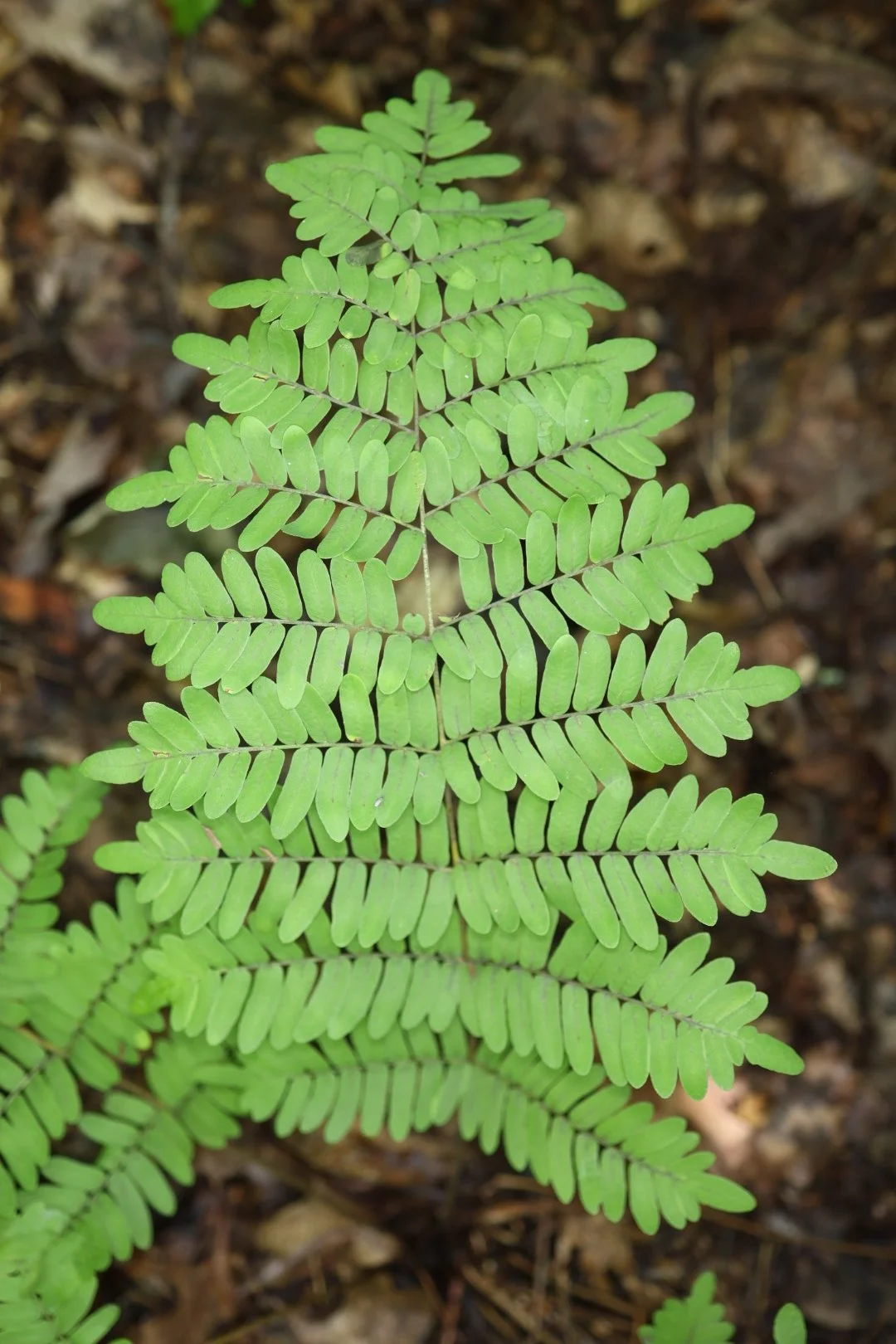
Current locally focused research projects in our lab include 1) study of species limits, cytogeography, and genetic diversity in the Helianthus strumosus (Asteraceae) species complex, 2) hybridization and species distributions in North American Huperzia (Lycopodiaceae), 3) origins of the rare hybrid royal fern Osmunda ×ruggii.
In addition to these active projects, we are always trying to learn more about a number of genera that are locally represented by rare and/or cryptic taxa, including Sagittaria (Alismataceae), Crataegus (Rosaceae), Persicaria (Polygonaceae), Xanthium (Asteraceae), and Asplenium (Aspleniaceae).